 By
By 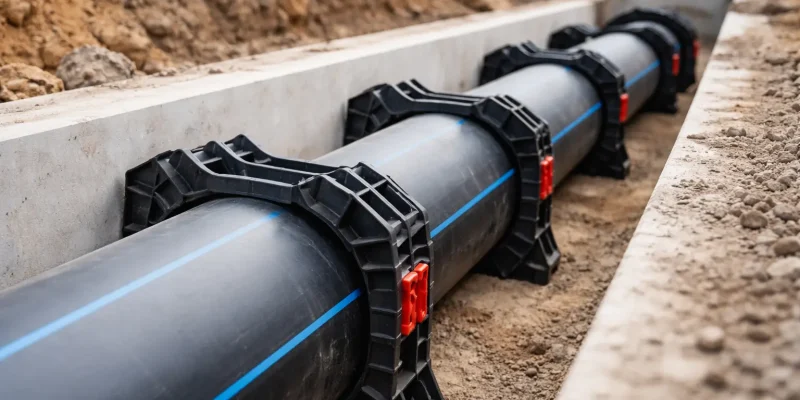
Anyone who has spent time on a construction or pipeline site knows one thing very quickly: it’s never the biggest components that cause the biggest headaches. More often, problems start with small parts that were ignored, underestimated, or chosen purely on price. Pipe spacers fall exactly into that category.
On paper, a pipe spacer looks like a simple accessory. Its job sounds basic—keep the pipe centered and maintain a gap. Because of this simplicity, many people assume all spacers are the same. Engineers know better. Over time, most engineers develop a clear preference for high-quality pipe spacers, and that preference comes directly from what they have seen go wrong when quality is compromised.
Experience Teaches Engineers Where Not to Cut Corners
Engineers don’t choose components randomly. Their decisions are shaped by failures, repairs, and site challenges they have encountered before. Many engineers can recall at least one project where poor-quality spacers caused alignment issues, damaged coatings, or delayed installation.
Once a pipeline is laid and backfilled, access becomes difficult and expensive. It is, more often than not, extremely difficult to repair anything that has shifted or deteriorated underground. Consequently, engineers almost always exercise caution and exclusive choice when it comes to the parts and devices that are to be permanently buried or hidden from sight. High-quality pipe spacers reduce unknown risks, and engineers value that predictability.
Pipe Alignment Is Not Just a Visual Requirement
For someone not involved in pipeline work, a pipe that’s slightly off-center might not seem like a serious concern. But engineers know that small alignment issues rarely stay small. Non-uniformity of footing distances leads to unequal pressure on pipes’ feet and this starts to induce stress at certain locations.
With the passage of time, the areas that are stressed the most are the ones that are prone to developing issues—such as the deterioration of the protective layer, the slow changing of the shape of the pipe, or the problems at the connections. For this reason, the engineers trust the pipe spacers of the best quality that are made with the exact dimensions. When spacers do their job properly, the pipe stays centered throughout installation, and engineers don’t have to worry about unexpected problems showing up later.
Load Conditions Are Rarely Ideal on Site
Pipes in practical situations are not resting smoothly in their positions. They undergo different treatments like being pushed, pulled, lowered, and frequently, even adjusted in places before the final placement. Soil conditions vary, trench bases are not always perfect, and external loads change during installation.
High-quality pipe spacers are designed to handle these realities. They support the pipe’s weight without cracking and maintain their shape under pressure. Engineers trust spacers that can cope with rough handling and site conditions, because they know installations are rarely as neat as drawings suggest.
Coating Damage Is a Costly Mistake
Pipeline coatings exist for a reason. They protect against corrosion, chemical attack, and environmental damage. Unfortunately, coatings are also one of the first things to suffer when poor spacers are used.
Low-quality spacers often have rough edges, weak contact points, or inconsistent surfaces. During installation, even small flaws in a spacer can end up scraping or puncturing the pipe coating. Engineers know that this kind of damage often goes unnoticed at the time, but it doesn’t stay harmless. What looks minor today can slowly turn into a corrosion issue years down the line. That’s why high-quality pipe spacers are designed to limit contact and avoid sharp pressure points. For pipelines expected to last decades, engineers don’t take chances—they insist on spacers that protect the coating from day one.
Engineers Think Beyond Installation Day
One of the biggest differences between engineering decisions and purchasing decisions is the time horizon. Engineers are not just thinking about today’s installation. They are considering the long-term effects on the pipeline’s behavior.
Premium quality pipe spacers are generally manufactured using constituents that endure moisture, chemicals, temperature variations, and soil conditions. They don’t rust, swell, or break down easily. Engineers prefer spacers that will still perform their function long after the project team has moved on to something else.
Installation Efficiency Matters More Than People Realize
On-site delays cost money, but they also increase pressure on crews. Poorly designed spacers that don’t fit properly or fail during installation slow everything down. Engineers value products that installers can work with easily and confidently.
Good-quality spacers are simply easier to work with on site. They sit where they’re supposed to, lock in properly, and don’t shift halfway through installation. When things fit the way they should, crews aren’t stopping to re-adjust, argue over alignment, or fix avoidable mistakes. Engineers value anything that helps translate what’s on the drawing into what actually happens on site—without unnecessary friction or last-minute fixes.
Compliance and Specifications Are Easier to Manage
Most engineering projects must follow strict specifications, whether they come from government authorities, consultants, or end clients. Using proven, high-quality pipe spacers makes compliance simpler.
Engineers prefer components that meet recognized standards because it reduces approval issues and documentation headaches. When a spacer has known performance characteristics, engineers can specify it confidently and defend that choice during inspections or audits.
Cheap Spacers Often Cost More in the Long Run
Engineers are quite aware of budgets, no doubt, but they nevertheless take life-cycle cost into account. A less expensive spacer might slightly lower the initial outlay, however, if it eventually results in the need for repairs, coating failures, or shifting of the pipes, the total cost will be considerably higher.
High-quality pipe spacers offer better value because they lower the risk of future intervention. Engineers usually have a total system performance view instead of focusing on the individual prices of components, which accordingly pushes them to the solutions of the highest quality.
Safety Considerations Influence Every Decision
Pipelines generally transport dangerous materials or work at a high pressure. Therefore, any change, stress concentration, or breakdown might be a safety issue. Engineers take this responsibility seriously.
Safe pipe spacers ensure stable installation which, in turn, is preventive to leaks or structural problems. Engineers prefer components that support safety rather than introduce uncertainty into the system.
Adaptability Across Projects Builds Trust
During their professional life, engineers will be involved in several different kinds of projects. They usually keep on using a spacer solution that is good for various applications, such as water, wastewater, industrial, or even infrastructure.
There is a range of premium pipe spacers in different sizes and configurations, so they can be used for almost any purpose. The fact that such spacers can be adapted to different situations permits engineers to accept the same high quality but at the same time apply it through different projects.
Sustainability Is Becoming Part of Engineering Judgment
The impact of the environment is becoming an important factor in engineering. The use of long-lasting parts that are more durable and require less frequent replacements is more compatible with the eco-friendly practices.
High-quality pipe spacers support this mindset. Selecting products that have a long and reliable performance is a practice of engineers that leads to less waste, lower material consumption, and reduced maintenance work.
Final Thoughts
Engineers choose high-quality pipe spacers as they have realized the consequences of neglecting quality. These insignificant items are really big when it comes to proper alignment, protection, durability, and safety. They might not be very prominent during project showcases, however, their silent way of influencing the success of an entire piping system is undeniable.
In the engineering world, trust is based on performance. High-quality pipe spacers have gained that trust by working unobtrusively under real-world conditions for a long time even after the installation is done. That is the reason why senior engineers still rely on them-job after job.